Banks are under pressure from every direction. Margins are thin, regulators are watchful, and customers expect seamless, always-on service. At the same time, many financial institutions are upgrading branches, vaults, data centers, and cash management facilities to keep up with digital demand.
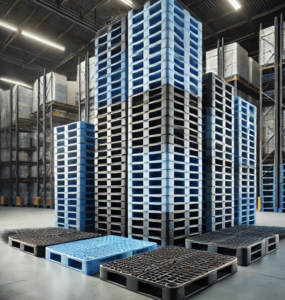
In the middle of all this transformation, one quiet but powerful upgrade often gets overlooked – the move from traditional wooden pallets to plastic pallets.
For modern banks that care about operational resilience, hygiene, safety, and sustainability, plastic pallets are not just a warehouse decision. They are a strategic choice that supports the same high standards reflected in daily banking news headlines from outlets like Reuters Finance & Banking, Bloomberg Business, and Financial Times Banks Coverage. Reuters+2Bloomberg+2
Below is a deep dive into why banks that want to stay ahead of the curve are moving to plastic pallets in their branches, vaults, currency centers, and logistics networks.
Supporting Operational Resilience In A Heavily Regulated World
Resilience is the theme of modern banking. Regulators, industry groups, and trade publications like American Banker emphasize how critical it is for banks to maintain robust operations even under stress, whether that stress comes from markets, cyber threats, or physical disruptions. American Banker
Plastic pallets support this resilience in several ways:
-
Consistent dimensions and construction
Plastic pallets are manufactured to tight tolerances. Every pallet of the same model is the same shape, weight, and size. For banks, that consistency translates into predictable stacking, better automated handling, and smoother integration with conveyor systems, robotics, and automated storage used in vaults and data centers. -
Higher durability under repeated use
Cash, coin, secure documents, ATM components, and IT equipment move constantly between branches, regional centers, and partners. Plastic pallets handle repeated trips, loading, and unloading without splintering, warping, or shedding nails. This reduces the risk of downtime caused by damaged pallets and the costly need to re-stack or repackage sensitive loads. -
Less debris and fewer disruptions
Broken boards and stray nails from wood pallets can cause damage to equipment, conveyor belts, and sensitive machinery. In a facility where high-value assets are stored and moved, a single jammed conveyor or damaged carton of currency can ripple through operations. Plastic pallets drastically cut down on debris, helping banks maintain smooth, uninterrupted workflows.
Elevating Safety And Security For High-Value Assets
Banks operate in secure environments where both people and assets must be protected. Industry groups like the American Bankers Association, through resources such as ABA Banking News, underscore the importance of risk reduction in every part of bank operations. American Bankers Association
Plastic pallets help banks in several safety and security dimensions.
-
Reduced workplace injuries
Wood pallets can splinter, crack, or leave nails exposed. In vaults, cash centers, and secure warehouses, any injury to staff is also an operational and regulatory risk. Plastic pallets are smooth, with rounded edges and no nails, reducing the chance of cuts, punctures, and trips. -
Stable footing for stacked loads
Banks frequently store heavy, dense loads: currency cases, coin boxes, secure document cartons, safe deposit boxes, and hardware. Plastic pallets often have more consistent surfaces and engineered anti-slip designs that support safer stacking and better load stability. -
Integrated features that support security
Many plastic pallet designs can be easily integrated with RFID tags, barcodes, and tracking systems. For banks, that means greater traceability around where pallets of cash, documents, or critical parts are, supporting internal controls, audits, and investigations when needed.
Meeting Hygiene And Cleanliness Requirements In Sensitive Areas
Banks do not operate like food manufacturers or hospitals, yet many of their facilities need a higher level of cleanliness than a typical warehouse. Data centers, check processing sites, and some specialized vaults require controlled environments to protect hardware, documents, and equipment.
Unlike wood, plastic pallets do not absorb moisture, dust, or contaminants. They can be:
-
Washed and sanitized to maintain clean conditions in data rooms and secure processing areas.
-
Resistant to mold and pests, which is especially important for long-term storage of documents and currency where infestations or mold growth would be unacceptable.
-
Less prone to harboring odors or stains, helping banks maintain facilities that align with their brand image of cleanliness and professionalism.
For banks that want their logistics and facility standards to match the level of control expected in their balance sheets and regulatory filings, plastic pallets are a natural fit.
Enhancing ESG, Sustainability, And Public Perception 🌱
Sustainability and corporate responsibility are now front-page topics in global banking coverage. Outlets like Reuters Finance News and US Banks Coverage at FT regularly report on how banks are reducing emissions, improving efficiency, and modernizing infrastructure. Reuters+1
Plastic pallets support these environmental and reputational goals in several ways.
-
Longer life cycles mean fewer replacements
A well-designed plastic pallet can last many times longer than a wooden pallet in typical bank logistics and storage conditions. Fewer replacements mean fewer trees cut, less manufacturing energy, and lower waste streams. -
Fully recyclable at end of life
Many plastic pallets can be recycled into new pallets or other plastic products. For banks that publish ESG reports, the closed-loop use of assets is a compelling metric and an easy win to highlight. -
Cleaner look for brand-sensitive areas
When corporate clients, regulators, or partners tour vaults, branches, or back-of-house areas, neat rows of clean plastic pallets support the message of order, control, and forward-thinking management. This matters for image, especially for institutions that operate on a national or global scale where reputation is a key asset.
Supporting Digital Transformation And Automated Handling
Banking leaders reading analysis in sources like Banking in the United States understand that the industry is changing at speed, driven by technology and new customer expectations. Wikipedia
As banks automate more of their physical operations, plastic pallets become a better match for:
-
Automated guided vehicles and robotics
Consistent size, weight, and base design are vital for AGVs and robotic arms used in high-security warehouses and data centers. Plastic pallets provide that uniformity, allowing automated systems to operate with fewer errors, misaligned forks, or dropped loads. -
Conveyor and racking systems
Sophisticated storage systems found in modern cash centers and fulfillment hubs for card stock, ATM parts, and promotional materials perform better with standardized pallets. Plastic pallets avoid the irregularities and damage that often cause issues with wood. -
Precise load calculations
Plastic pallets have predictable weights and structural ratings. This helps facility managers and engineers calculate load capacities accurately for racks, mezzanines, and lifts. In a regulated industry, accurate documentation of safety margins is another way to reduce risk.
Lower Total Cost Of Ownership Over Time
The banking industry is constantly searching for efficiencies. Trade publications and financial media such as Bloomberg Business and Financial Times Banks Coverage regularly highlight cost-cutting, branch consolidation, and process optimization by major institutions. Bloomberg+1
Plastic pallets often cost more up front than wooden pallets, but the lifetime economics often favor plastic in a banking context.
-
Reduced replacement rate
Fewer damaged pallets mean fewer emergency orders, less disruption, and fewer losses due to damaged goods. Over several years, this often outweighs the initial higher cost. -
Less damage to contents
Splinters, nails, and broken boards can tear cash cartons, puncture packaging, or scratch expensive hardware. Avoiding that damage protects both the bank’s assets and its brand. -
Improved handling efficiency
When pallets move smoothly through distribution centers, vaults, and back-office facilities, labor efficiency improves. Staff can complete more moves per shift with fewer delays and safety incidents, which is a direct cost benefit.
Better Fit For Multi-Channel Banking And Partner Logistics
Modern banks operate far beyond branches and ATMs. They work with third-party processors, fintech partners, fulfillment centers, card vendors, and specialist facilities. Many of these partners have their own standards for pallets and handling.
Plastic pallets make collaboration easier.
-
Standardization across the network
Large financial institutions can specify a standard pallet footprint and design to be used across branches, regional hubs, and third-party warehouses. Plastic pallets make it easier to maintain that standard consistently in every location. -
Compatibility with export and cross-border shipments
For banks that move equipment, documents, or hardware across borders, plastic pallets can reduce the complexity related to wood treatment regulations and phytosanitary rules. There is no need to worry about fumigation stamps, insect infestation, or customs delays related to untreated wood. -
Stronger message to partners
When banks show up with modern, hygienic, and sustainably positioned pallet systems, it signals to vendors and partners that they are serious about efficiency and ESG alignment. That can support better negotiations and stronger long-term relationships.
Aligning Physical Infrastructure With The Pace Of Banking News
Every day, major outlets like Reuters Finance & Banking, American Banker, and ABA Banking News spotlight banks that are modernizing, consolidating, or restructuring their operations to stay competitive and compliant. Reuters+2American Banker+2
Plastic pallets may seem like a small detail compared to core banking systems or digital channels, but they are part of the same story. They reflect:
-
A commitment to operational excellence in every corner of the organization.
-
A mindset that values safety, security, and compliance, not only in software and risk models but also in physical infrastructure.
-
A belief that sustainability and efficiency can go hand in hand, even in something as practical as how pallets support currency, documents, and hardware.
Conclusion: A Simple Upgrade With Strategic Impact ✨
Banks that win in the current environment are those that treat every part of their operation as a chance to reduce risk, improve efficiency, and strengthen their brand. Plastic pallets fit that mindset perfectly.
They deliver longer life, better hygiene, safer handling, and stronger support for automation and ESG goals. They help keep facilities clean, secure, and consistent with the high standards expected of institutions that hold customer deposits and move money around the world.
In a world where banking headlines move fast and expectations are high, switching from wood to plastic pallets is a practical, smart, and future-ready choice that aligns physical operations with the strategic direction of modern banking.